



| No. | School Name | District | Block | Action |
|---|---|---|---|---|
| 1 | Bright Middle School | Ambala | Ambala-I (City) |
|
| 1 | Khalsa Middle School Rajouli | Ambala | Barara |
|


The Department of School Education, Haryana committed to improve quality of education of all children in Haryana. Department of school Education believes school accreditation would enhance efforts of the department to improve quality of schools.
National Education Policy 2020 (NEP 2020), released by the Ministry of Education, Government of India, emphasizes on revamping all aspects of the education system. This includes regulation and governance to create a new system that is aligned with the aspirational goals of 21st-century India, including Sustainable Development Goal 4 that ‘aims to ensure inclusive and equitable quality education and promote lifelong learning opportunities for all’, while building on its traditions and value systems.
NEP 2020 also directs states create state standards for school accreditation to objectively measure school performs and plan improvement. In line with this recommendation, the Haryana Department of School Education has developed a School Quality Assessment and Accreditation Framework (SQAAF) to accredit all schools across the state.
Through this SQAFF, the state aims to set a process that showcases educational outcomes and ensures transparent disclosure of all financial, academic, and operational matters.
The goal of school accreditation is to evaluate the school comprehensively and objectively through a framework that is aligned with both national and international standards, while being relevant to the local Haryana context
Enable an incremental approach to school improvement aided by school report cards and data dashboards.

Gather relevant data and information from the schools to inform evidence-based decision-making at the state/ district level.
Promote accountability by ensuring schools undergo evaluations regularly and demonstrate that they are meeting the quality standards.
Facilitate efficient deployment of funding and resources for schools to achieve the minimum quality standards.
The Department of School Education, Haryana has developed a School Quality Assessment and Accreditation Framework (SQAAF) to accredit all schools across the state.
The framework comprises of seven domains of school quality. Each domain has a group of standards that cover various aspects of school improvement. Similarly, each standard has specific questions (indicators) to objectively measure achievement in a standard.
The School Accreditation Framework has the following outlined 7 domains

With a focus on leadership and management practices of head teacher, this domain aims to establish processes and deliver quality education through staff development, effective administration,
and ensuring that school development plan addresses the school priorities.
The domain identifies teachers’ knowledge, preparation, and practices to support and enable learning within classrooms. It also looks at a range of strategies used by teachers to create safe and
inclusive classrooms, promoting a high quality learning environment within a classroom. . Teachers’ understanding of curriculum and subject knowledge links directly to the varying needs of learners, syllabus, and assessment of learning for informed teaching and planning.

Effectiveness of teaching and learning processes that reflect in student progress, attainment of learning outcomes and sharing of progress with parents’ community are key aspects of this domain.

The domain focuses on the experiences a student would have gained at school for all-round development. This includes cognitive development and focuses on social, physical, and cultural
development as well.

This domain focuses on students’ health and building awareness and understanding of safeguarding issues amongst school staff and parents. To ensure safety, a school needs to assess
risks regularly and take appropriate measures and actions in a range of areas, including cyber safety.

Quality of the school resources that include buildings, mid-day meals, availability of water, physical resources including laboratories, technology, and library that the teachers and
students use are available in appropriate quantity, well maintained and are used regularly. The resources are reviewed and planned to improve both teaching and learning activities.

For a school to achieve its vision, engaging with all stakeholders including the parents, alumni and the wider community is key. They work together to support and improve learning for students and
approach other sources to improve school assets. Through School Management Committees (SMCs/Parents Teachers Association (PTA) the community has a voice in school that brings a local context utilising available resources, focusing on holistic development of students and effective management of the school.
The self-evaluation process will give a chance to the school head and teachers to observe each standard. This will help them revise and work on the areas of improvement. Involving teachers in the
activity will cover an important aspect of collective decision-making in the development of their school. This exercise will also help teachers to reflect upon their teaching approach and methods.
A great sign of a healthy environment in a school can be identified by the participation of the community The school accreditation exercise in Schools helps the community and schools to
collaborate to understand performs of the schools and support schools improving school quality. Also this process provides information to parents and community to objectively evaluate performances of schools across various parameters in a neighborhood, promoting school choice based on objective criteria.

The findings through the evaluation exercise will help the education officials to take informed evidence-based decisions wherever required. Analysing the school findings helps in the
identification of the problem areas in which modifications of policies and process functioning can be undertaken with a view to simplify the system and ensure that it more efficient.
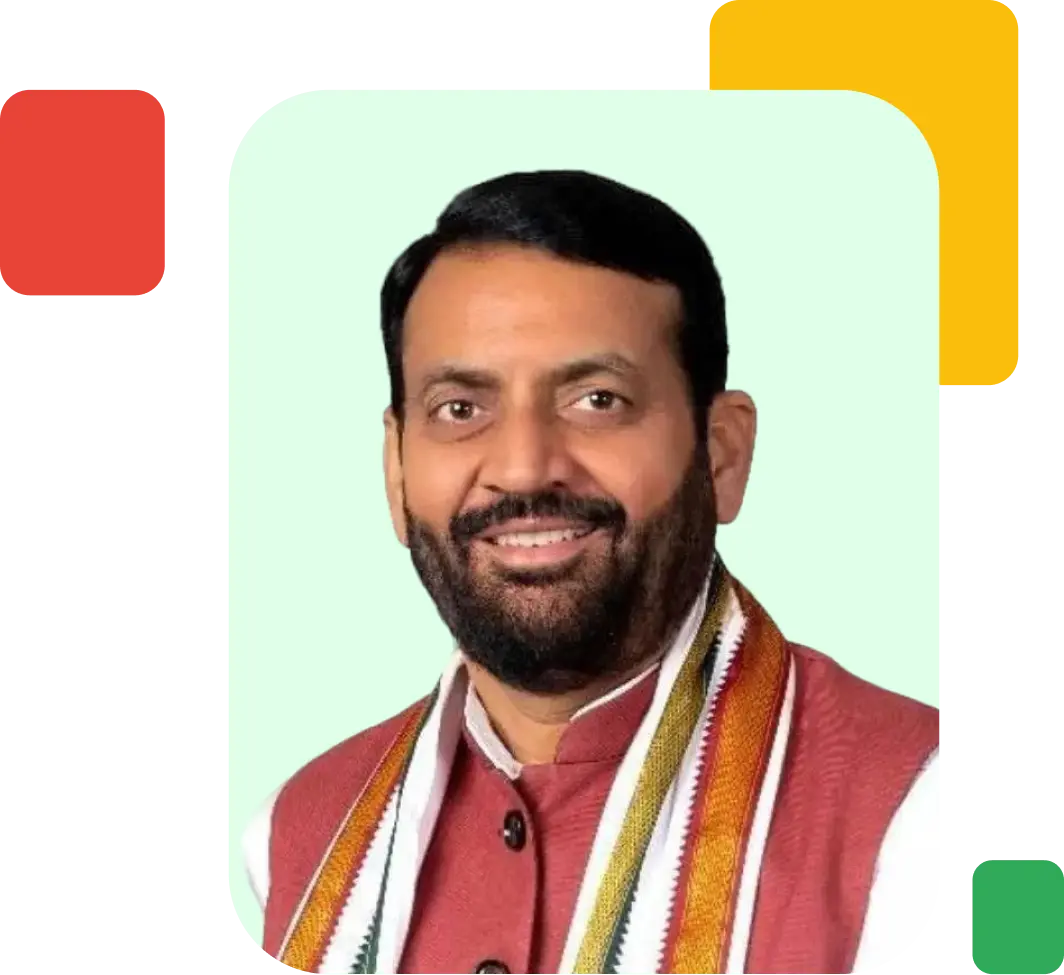
Nayab Singh Saini (born 25.01.1970), is an Indian politician serving as the 11th and Current Chief Minister of Haryana since 12th March 2024 and the President of the Bharatiya Janata Party, Haryana since 2023.
He was also the MP from Kurukshetra Lok Sabha constituency from 2019 to 2024, Minister of State, Government of Haryana from 2015 to 2019 and the member of the Haryana Legislative Assembly from Naraingarh Assembly constituency from 2014 to 2019. He was elected as the Leader of BJP's Legislative Party and subsequently became the Chief Minister of Haryana.
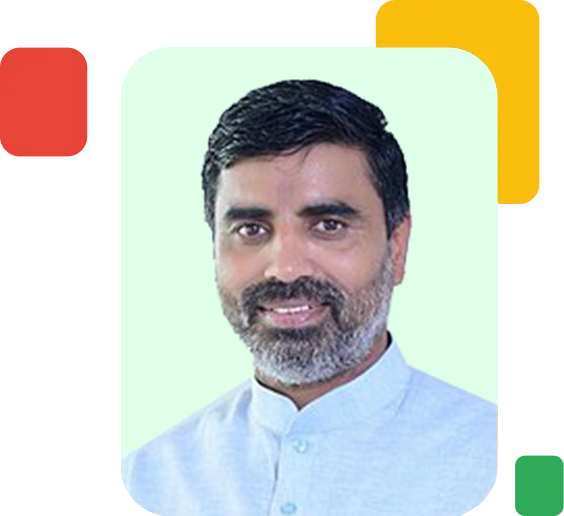
He was elected to the Haryana Legislative Assembly from Panipat Rural (Vidhan Sabha constituency) in the 2014 and 2019 Haryana Legislative Assembly election as a member of the Bharatiya Janata Party. He was born on 16 September 1974 in Kawi, Panipat district, Haryana. He comes from a farming family.

